You’re reviewing your marketing data. A sponsorship, a local partnership, or a community event you invested in shows zero direct calls. So you make the logical decision: kill it.
But here’s what most plumbers miss: that source was probably working.
This is one of the biggest mistakes I see in the home services industry—and it’s costing businesses hundreds of thousands of dollars in lost leads every year.
The Sponsorship Banner Problem
Let me paint a picture.
You sponsor your kid’s soccer team. You get a banner at the field. A parent at the game sees your name. She feels good about you because you care about the community.
Now here’s where most people go wrong: they put a call tracking number on that banner expecting her to write it down and call immediately.
She won’t.
She’s watching her kid play soccer. She’s not thinking about plumbing problems. Her attention is completely elsewhere.
But something did happen that day—she subconsciously registered your name and connected you with something she cares about (her child’s soccer team).
Where the Attribution Breaks Down
Fast forward three weeks.
She has a burst pipe in her home. Now she needs a plumber. What does she do?
She pulls out her phone and Googles “plumber.”
She doesn’t remember the sponsorship banner. She doesn’t call that number. She searches Google, finds you in the results (hopefully with great reviews and photos), and calls the number she finds there.
Here’s the problem: your system attributes that lead to SEO.
But it wasn’t SEO that got her to call you. It was the sponsorship three weeks ago that built enough trust and familiarity that when she searched, your name or your Google Business Profile looked trustworthy.
You just gave credit to the wrong source.
The Messy Middle
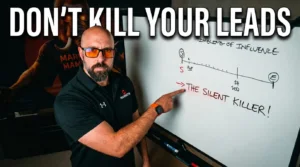
This is what we call “the messy middle”—the invisible gap between when someone first encounters your brand and when they actually pick up the phone to hire you.
Most marketing is happening in this messy middle. And most plumbers aren’t accounting for it.
Here’s how it actually works:
- Awareness phase: Sponsorship, local ad, social media post, word-of-mouth
- Silent period: Customer goes about their life (could be days, weeks, or months)
- Problem phase: They have an emergency or need
- Search phase: They search for a solution
- Decision phase: They call based on what they find
That search in step 4 gets attributed to SEO. But steps 1-3 did all the heavy lifting.
Why This Matters
When you don’t understand the messy middle, you make decisions based on incomplete data:
- You kill marketing sources that are actually working because they don’t show direct ROI
- You over-invest in lead generation tactics (like paid search) that seem to work in isolation but aren’t sustainable long-term
- You stay commoditized because you’re not building brand awareness and trust—you’re just chasing immediate leads
- Your customer acquisition cost climbs because you’re always paying for leads instead of earning some through influence
The Real Path to Sustainable Growth
Instead of expecting a one-to-one relationship between a marketing action and a phone call, think of marketing as a system of influence.
That sponsorship isn’t a lead source. It’s a trust builder.
That social media post isn’t a lead source. It’s a top-of-mind builder.
That Google Ads campaign isn’t creating leads from nothing. It’s capitalizing on the awareness you’ve already built.
When you combine these elements—influence + direct response—that’s when you see explosive growth.
Here’s what that looks like:
- You sponsor the soccer team (awareness)
- You run Meta ads to parents in that area featuring five-star reviews (credibility)
- You’re active on Google Business Profile (trust signals)
- When someone searches “plumber near me,” you appear first (search visibility)
- They see your photos, reviews, and business info
- They call
That phone call came from a combination of all those touchpoints. But your data will probably show it as “Google Search” or “Google Business Profile.”
How to Track What Actually Matters
You can’t track this with a call tracking number on a banner. But you can understand it by looking at the bigger picture:
Ask these questions:
- When did you launch this marketing initiative? (sponsorship, ad campaign, etc.)
- When did you see a spike in phone calls or bookings?
- How far apart are those two dates?
- Did you launch other marketing at the same time?
Track trends, not just attribution:
- Monitor your overall call volume week-to-week and month-to-month
- Look at which marketing channels are active during high-call periods
- Note seasonal patterns (back-to-school sponsorships, holiday campaigns, etc.)
Survey your customers:
- Ask: “How did you hear about us?” (They’ll often mention multiple sources)
- Ask: “What was the first time you remember seeing our company?”
- This tells you the real path, not what your call tracking software says
Use multi-touch attribution:
- If your ESP or CRM supports it, enable multi-touch attribution
- This gives credit to multiple touchpoints instead of just the last click
The Long Game vs. The Short Game
Here’s the harsh truth: plumbers who only chase direct response leads will never scale.
You’ll always be dependent on paid ads, always paying for leads, always fighting for ROI on individual campaigns.
But plumbers who build influence and brand awareness alongside direct response?
They win because:
- Customers come to them with higher trust
- They’re not price-shopped as aggressively
- Referrals increase (because people know and trust the brand)
- Customer lifetime value goes up
- Marketing becomes more efficient over time
What to Do Right Now
If you’ve been cutting off marketing sources because they don’t show direct calls, pause that decision.
Instead:
- Look at your overall trends — Are calls up or down since you launched that initiative?
- Combine sources — Don’t sponsor a team without also running brand awareness ads to that demographic
- Measure differently — Stop expecting call tracking numbers to prove everything
- Build systematically — Use sponsorships, community involvement, social media, and paid ads together
The best plumbing companies aren’t the ones winning the attribution game. They’re the ones building the most trust and familiarity in their market.
That’s the real competitive advantage.
Want help auditing your marketing strategy?
If you’re not sure whether you’re over-investing in the wrong channels or under-investing in brand awareness, we can help. Schedule a free consultation with our team and we’ll give you an honest diagnosis of your current marketing mix.