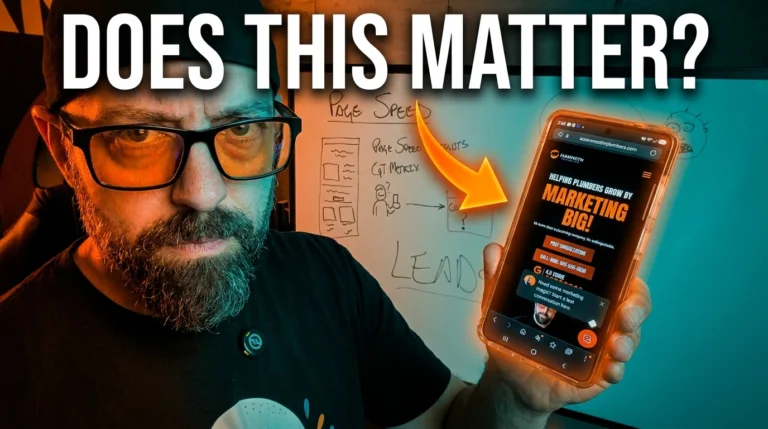
It is a story played out every week in conference rooms and Zoom calls across the country: a frustrated plumbing contractor sits back in their chair, throws their hands up, and declares that digital advertising is a scam. “We tried Google ads… we tried Facebook ads… ads just don’t work for our plumbing business!”
According to the team at Mammoth Marketing, an agency specializing exclusively in scaling plumbing companies, this frustration is entirely understandable—but completely misplaced.
When a plumbing ad campaign fails to deliver leads, the underlying issue is rarely the ad platform itself. In fact, roughly 99% of the time, digital ads work exactly as intended. The real problem is a massive, hidden leak in the marketing pipeline that occurs between the moment a homeowner clicks an ad and the moment they try to book an appointment.
Tyler Williams, founder of Mammoth Marketing, recently hopped off a client consultation where he spotted this exact error happening yet again. Because this single mistake drains thousands of dollars from plumbing budgets every month, Mammoth Marketing breaks down the exact science behind why plumbing ads break—and how contractors can fix their online setup to start generating reliable, high-converting service calls.
Inside a Marketing Audit: Spying on Plumbing Ads
To understand why so many advertising dollars go missing, it helps to look at the tools digital marketers use to analyze the competition.
Through public resources like the Google Transparency Center and the Meta Ad Library, industry experts can inspect active ad campaigns across the web, view creative assets, and follow the exact links potential customers click.
During a recent audit of local plumbing campaigns, the team at Mammoth Marketing stumbled across an ad running a $75 off drain cleaning special.
At first glance, targeting homeowners with a drain cleaning promotion is a solid strategy. Drains clog every single day, making it an evergreen offer. Now, truth be told, a $75 discount is a bit on the “weak sauce” side when trying to stop a busy homeowner mid-scroll—a stronger, more aggressive offer usually performs much better. However, testing offers and trying new campaigns is half the battle in digital marketing.
The real tragedy wasn’t the discount amount. It wasn’t even the fact that the company lacked conversion tracking to measure their return on investment (though that is a whole other issue).
The real disaster happened the exact moment someone clicked on the ad.
The Two Traffic Destination Traps
When a user clicked on that promising $75 drain cleaning ad, where did it take them?
It sent them straight to the front page of the plumbing company’s general website.
To many business owners, sending paid ad traffic to their homepage feels totally natural. They spent hard-earned money building a beautiful, modern website, so why not bring new visitors through the “front door”?
In the world of direct-response marketing, however, dropping ad traffic onto a homepage is a total conversion nightmare. To see why, consider the psychological journey of the consumer.
[ Prospect Sees Ad ] ──► [ Clicks Offer ] ──► [ Drops onto Generic Homepage ] ──► [ Gets Confused ] ──► [ Leaves ]
Trap #1: The Homepage “Front Door” Disaster
Imagine a prospective client named Dave. Dave is hanging out on his couch on a Tuesday night, scrolling through Facebook, when he suddenly remembers that his bathroom sink has been draining painfully slow all week.
Right on cue, Dave sees an ad offering a discount on drain cleaning. He thinks to himself:
“Heck yeah! I’ll save $75, get this annoying sink cleared out, and use those extra savings to take the family out for a steak dinner. Well, actually, I’ll order a steak for myself and let them watch me eat it.”
Dave clicks the ad, expecting to claim his deal immediately. But instead of seeing a page about drain cleaning, Dave lands on the company’s main homepage.
Suddenly, Dave is forced to play detective. He is greeted by photos of the company’s truck fleet, a paragraph about how the business was founded in 1984, links to commercial repiping services, and zero signposts pointing to the drain offer.
Confused and unwilling to dig through navigation menus, Dave closes the browser tab and goes back to social media. The plumbing company just paid $10 for that ad click, Dave’s drain is still clogged, and a potential lifelong customer walked away.
Trap #2: The Generic Contact Page
When business owners realize the homepage isn’t converting ad traffic, their second impulse is often: “Okay, fine! We’ll just send ad traffic directly to our Contact Us page so they can reach out!”
According to Mammoth Marketing, sending paid visitors to a contact page is almost just as bad—if not worse.
Most contact pages are digital deserts. They contain a blank form, a phone number, and a physical address. They completely lack:
Customer reviews and social proof.
Guarantees or service promises.
Reiteration of the promotional offer that caught the user’s eye.
Compelling reasons why the homeowner should choose this plumber over the competitor down the street.
The Blueprint: High-Converting Service Landing Pages
To stop wasting ad spend, plumbing contractors must completely wipe the idea of using homepages or contact pages for advertising from their brains.
Instead, ad traffic must be routed to a dedicated service landing page—or a service page on the primary website that has been specifically engineered for conversion optimization.
When Dave clicks a drain cleaning ad, he should land on a page that is 100% focused on drain cleaning. The offer must be bold, clear, and displayed right front and center so there is zero confusion about what to do next.
| Standard Website Approach | High-Converting Landing Page Strategy |
| Sends clicks to the main Homepage or Contact Form. | Sends clicks to a dedicated, service-specific page. |
| Forces users to search through menus for details. | Displays the specific promotional offer front and center. |
| Relies heavily on cold, slow online form submissions. | Prominently features a direct “Call for Details” action button. |
| Fails to build immediate trust or social proof. | Highlights trust badges, reviews, and service guarantees. |
The Power of “Call for Details”
A critical element of a high-converting landing page is clear, friction-free direction. You have to lead the user directly to the action you want them to take.
Rather than forcing homeowners to fill out a multi-field contact form—which allows the lead to cool off while waiting hours for an email reply—landing pages should drive immediate phone calls.
Mammoth Marketing recommends placing a large, unmissable button at the top of the page with a simple command: “Call for Details.” Add a clear phone icon next to the text (even if modern smartphones look more like sleek glass bricks than traditional phones, everyone still recognizes the classic receiver icon).
“Call for Details” works remarkably well because:
It piques curiosity regarding the exact terms of the offer.
It eliminates mobile typing friction for homeowners in a rush.
It connects the homeowner directly with a live team member while their intent to hire is at its peak.
CSR Training and Marketing Retargeting Loops
Once the landing page prompts the homeowner to click “Call for Details,” the digital marketing side has done its job. The lead is handed off to the plumbing company’s internal team.
Training CSRs to Close the Deal
If a prospective customer calls in asking about the online drain special, Customer Service Representatives (CSRs) need a structured script to convert that inquiry into a booked job:
Step 1: Validate and Create Urgency — The CSR confirms the offer and mentions limited promotional availability (e.g., “We actually only release a few of these promotional slots per week, but I have an opening available this afternoon!”).
Step 2: Book the Primary Job — Secure the appointment immediately while interest is high.
Step 3: Position the Upsell — Instruct technicians to inspect broader plumbing systems while on-site (e.g., offering a complimentary video pipe inspection).
This approach turns a simple $75 drain clearing into a long-term customer relationship and opens the door for higher-ticket repair opportunities down the road.
Key Takeaway: If the flow breaks at the top of the advertising funnel, zero leads come out the bottom. Business owners end up completing their fiscal year wondering why thousands of advertising dollars produced zero tangible growth.
The Retargeting Loop (“The Mattress Effect”)
What happens if a homeowner hits the drain cleaning landing page, likes the offer, but gets distracted by a barking dog or a ringing phone before calling?
Since a slow drain is an annoyance that homeowners can tolerate for a few days, that lost visitor isn’t gone forever—provided the plumbing company utilizes retargeting loops.
Most people have experienced searching for a mattress online, only to have ads for that exact mattress follow them around Facebook, news sites, and apps for the next month. That is retargeting in action.
By placing a simple tracking pixel on service landing pages, plumbing companies can display follow-up ads to hesitant visitors across Google and Meta networks for 30 days. This keeps the plumbing brand top-of-mind until the homeowner is ready to pick up the phone.
Scaling Your Plumbing Business with Mammoth Marketing
Building a profitable, scalable plumbing company requires an ad system where every part of the engine works together: targeted ad copy, service-specific landing pages, compelling “Call for Details” triggers, well-trained CSRs, and automated retargeting loops.
If any of those links in the chain are broken, advertising budgets end up washed down the drain.
For plumbing business owners who want an expert team to inspect their digital marketing engine, identify leaks, and map out a customized growth strategy, Mammoth Marketing provides comprehensive, industry-specific guidance.
Mammoth Marketing offers 1-hour consultations completely free for plumbers (and only plumbers—if a drywall contractor calls asking for marketing help, the price automatically jumps to $4,000!).
Ready to stop wasting money on broken ad campaigns and start filling your service schedule? Head over to Mammoth Marketing today to claim your spot!
👉 Schedule Your Free Consultation at Mammoth Marketing Today!